Tuesday, 18 February 2014

The trees arrive

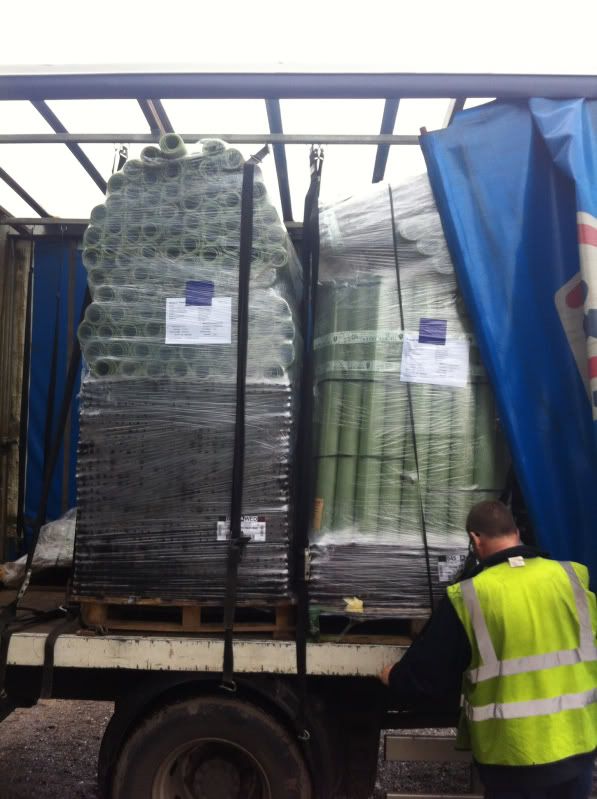
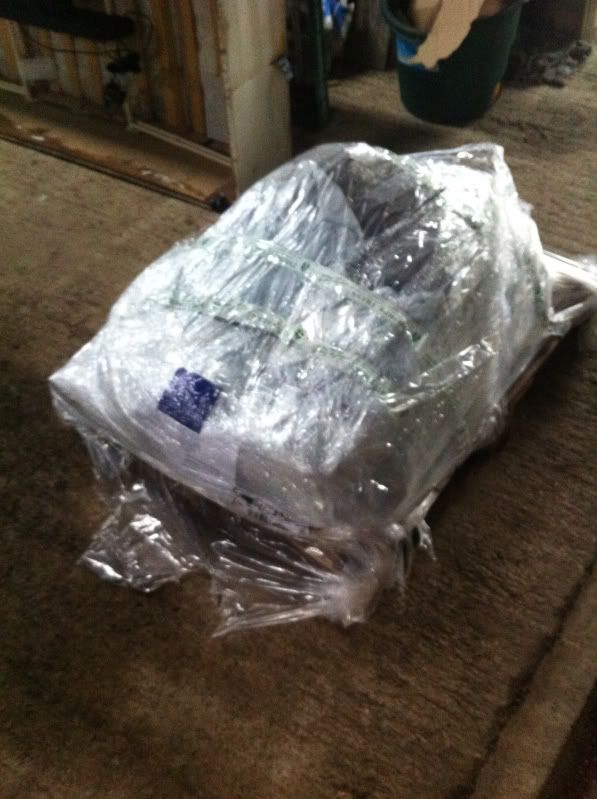
After what seemed like an age, the trees were delivered. Was a bit daunting to see how many tubes and stakes the order comprised! Thank goodness I didn't order 4,500 as suggested

The plants themselves didn't look too bad, how wrong I was:


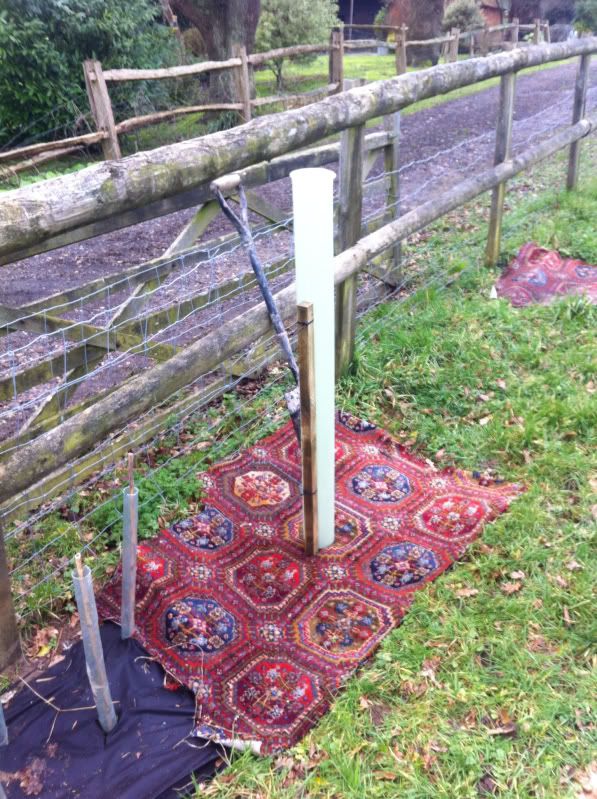
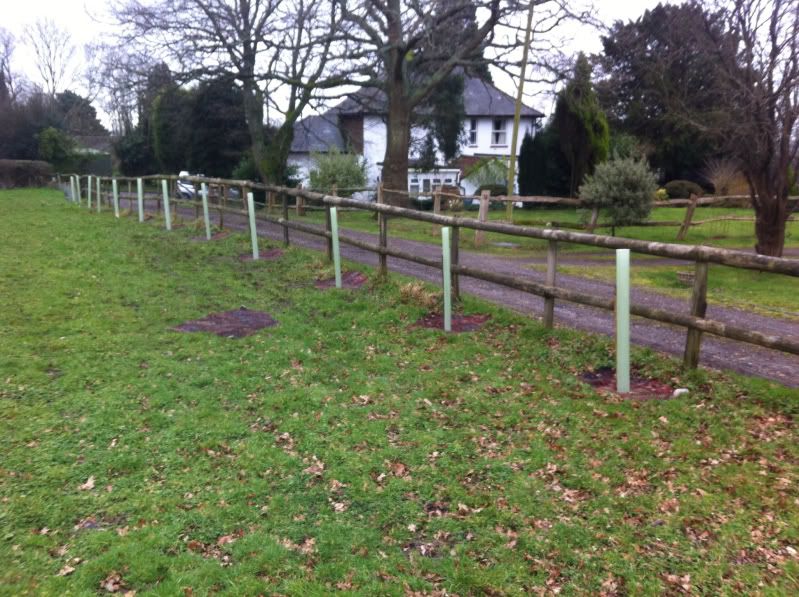
Thought I'd better get cracking before my help arrived the following morning so planted 50 wild cherry trees. The first ones will form an avenue down the drive which should make for a beautiful arrival when in blossom.

First one!


I then continued planting the avenue


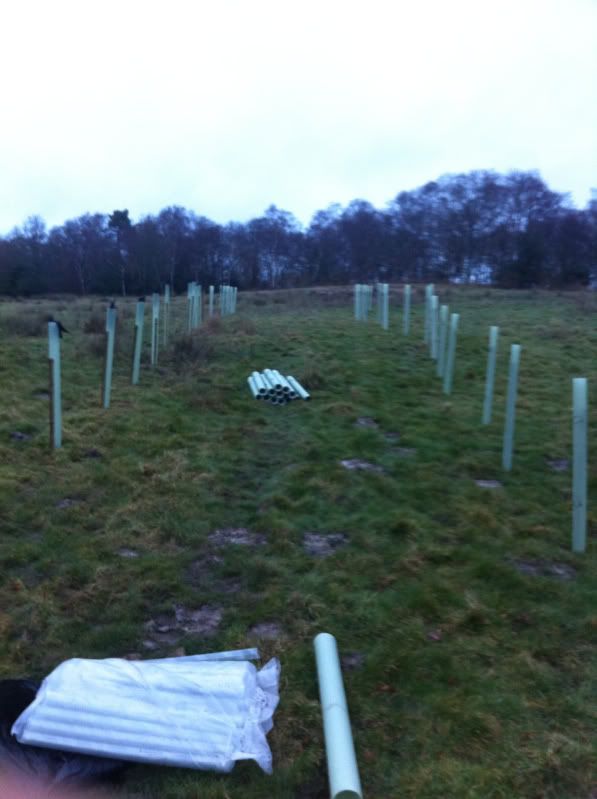
Once this was done, I moved into the upper paddock, where the real planting was going to take place. My wife suggested an avenue leading up to the pond would look nice, so that's what happened:


You can see how wet it is


Thursday, 16 January 2014

Woodland Plans

As I alluded to before, I had always wanted my own woodland, for various reasons, amongst them being a source of fuel, a place to camp and a place to reconnect with nature. My interest in bushcraft had only increased my want for a place of my own that I could manage to my own ends. Unfortunately, apart from the small orchard and numerous trees around the perimeter, there was no woodland associated with the property. With little money spare and with the neighbours being in no mood to sell me their woodland, I had no option but to plant one from scratch.


Some searching around for assistance led me to the Woodland Trust MOREWoods scheme (see Links). This is an initiative set up by the Woodland Trust in order to create more woodland in the UK and comes in the form of a substantial discount on the purchase prices of young trees and the necessary protection they would need to avoid predation by deer, rabbits and other creatures.


A few e-mails and phone calls later, I had a visit scheduled by one of their representatives who would survey the site and advise on species and quantity of trees for my new woodland.


The Woodland Trust representative, Luke, arrived and we walked the pasture together. He had a fair knowledge of tree species but explained that there was only a limited number of species available, all native trees. He promised to come back with a quote in a few days.


The quote duly arrived and was for 4,500 trees, including a lot of willow and birch. As much as I like birch, the wood rots very easily and there was plenty around, including a huge one that had recently fallen down (conveniently it was one that was leaning on another and I was going to have to pay a tree surgeon to drop it but the storms over the Winter pushed it to the ground and I spent a few days clearing up the remains with a chainsaw). Willow, of many species at least, takes root extremely easily from cuttings and I was reluctant to pay for bareroot cuttings  - especially for Goat willow (salix caprea) that is not of great value either for timber or for weaving/ living structures. The inital plan was to blanket the entire upper paddock with trees, as well as planting some clumps in the lower paddock. Discussions with family, colleagues and on-line made me reassess my plans and leave a significant amount of pasture free from planting, in order to graze animals if required. A few unexpected large bills also made me nervous to commit to such a large order and the Trust was happy to amend the quote to 1,500 trees, as well as amending the selected species.


The species selected were as follows (numbers in brackets were final figures):

Species

Number

Notes

Alder

300 (375)

I selected alder because it thrives on damp ground, grows quickly, coppices easily and provides excellent firewood once dry. The charcoal is said to make the best gunpowder and the roots form nitrogen fixing nodules that will help to improve soil conditions. The lack of sweet chestnut and whitebeam is the reason for the increased order

Aspen

50 (75)

The Latin name for Aspen is populus tremens – the trembling poplar. This is because the cross section of the leaf stalk is rectangular and thus makes the leaf flutter from side-to-side in the wind, a very attractive sight on a mature tree. I had also read that as a pioneer species, aspen is not fussy about soil type and grows rapidly. The whitebeam order was split between alder and aspen

Beech

125

Not traditionally associated with damp soils but there is an enormous beech tree over the fence on a neighbouring property. Makes for an attractive tree and provides good timber when mature. I had originally wanted copper beech for the pretty foliage but these weren’t available.

Blackthorn

50

I wanted this for the sloes (sloe gin anyone?) and the blossom.

Crab apple

50

There was a single, mature crab apple in the hedgerow and as well as providing a useful fruit, full of pectin for jam-making, it has pretty blossom

Field maple

100

I had queried why sycamore wasn’t on the list but was told it was an invasive species. Subsequent research doesn’t really support this theory but the field maple is an attractive tree nonetheless and I have since been offered no end of sycamore seedlings should I want them. I’m hoping once mature the sap may prove to be a good source of maple syrup, although the species used for this in Canada is the sugar maple, acer saccharum

Hazel

150 (200)

The Woodland Trust considers this to be a shrub rather than a tree, which surprised me as a friend’s woodland has some very large examples. Selected for the many uses of coppiced product, pea sticks, hurdles etc. and also for the nuts. Makes excellent firewood which is why I increased the numbers at the expense of hawthorn

Hawthorn

150 (125)

I must admit to being a bit sneaky here. I like hawthorn, it has pretty blossom, the fruits are edible (as are the new leaves in Spring) and it provides some of the best firewood although you don’t see many large examples around. I wanted to extend the hedge along the road up alongside the drive. The thorns on hawthorn make for excellent security and it’s most often found in hedgerows. There are some larger examples on the property that I presume grew from unmanaged hedges. As it turned out, my calculations showed that I would need far more than this for a high density hedge so I ordered and planted a few hundred before these ones arrived

Hornbeam

50 (75)

A great firewood and also used to make cog teeth in water mills. Like beech it often keeps its leaves on in the autumn which is why it’s often planted as a hedge. There is a single example in the hedge already

Pedunculate oak

125

What tree symbolises England more than the mighty oak? There are many large examples around the perimeter but many have been cut down nationwide to provide timber for building ships and houses. Although taking an age to season (3 years is best), the firewood is great. We’ve got some different species of oak on the property which I’ve yet to identify and have many seedlings sprouting up from the bumper crop of acorns in the past autumn

Scots pine

25

The road on which our property sits used to have a long plantation of Scots pine along it (over the road). They were cut down before WW2 and we have a single example dominating the corner of the lower paddock. My fancy was to grow two circles of pine trees, to provide a focal point should we be holding camps here in the future. The remaining tree will be planted somewhere else.

Spindle

50

The berries of the spindle tree look delicious but sadly they’re poisonous to humans. Pretty, though, and the birds can eat them. Planted for this reason. It’s listed as a shrub

Sweet chestnut

125 (0)

We have 2 on the property and although it’s one of the best trees to coppice, I am reluctant to chop them down. Sadly, the nursery was out of stock for the final order but there are plans to plant many more next year, for timber and nuts

Whitebeam

50 (0)

Initially ordered for variety and the attractive berries, subsequent reading made me nervous that they wouldn’t like our acid soil, preferring alkaline, dry conditions so I subsequently changed the order

Wild cherry

125

Planted for the blossom as well as the fact it likes damp ground and provides good firewood


The Woodland Trust initially suggested quite large number of dog rose (rosa canina) but I’ve always seen this as a climber in hedgerows. I’m hoping to propagate some later in the year for planting in the hedges. The blossoms are beautiful and it helps to make an impenetrable hedge – not what I’d consider suitable for a standard tree. They also suggested holly but as we have plenty already, I decided not to plant any more. It’s certainly attractive throughout the year and supplies pretty berries for Christmas but I am reluctant to have spiky species in my woodland – there’s enough brambles around for that!

Other trees I wanted included ash, fraxinus excelsior, but due to the risk of hymenoscyphus pseudoalbidus (formerly known as chalara fraxinea) in the UK, this fast growing firewood species was not offered, and wild pear, for the blossom and fondness for damp ground. This wasn’t on offer for some reason but hopefully I can plant some next year.

A note on firewood

A cursory search on the Internet for firewood suitability will bring up variations on an old poem which gives erroneous information on which wood is best to burn. The fact of the matter is, any wood, once dry, will burn and give out plenty of heat. Willow and alder, for example, have a high water content so take a bit more drying and since they grow fast, they won’t burn for as long as, say, oak, but there are plenty of tree surgeons out there who heat their homes on wood considered low quality. Green oak burns like asbestos (i.e. doesn’t) but biomass plants use predominantly willow

Monday, 2 September 2013

The book and the spring

Sounds a bit like the the title of a story by Kafka but I can assure you that I possess few of his talents (as readers of this blog will testify).

On one of our visits to the property whilst in the process of buying it, the then owner showed us a book. Called "A Farmers Boy" it was brought to her attention by a friend who had noticed that it had a picture of her house on the front. It was written by a man who had grown up there during WW2 and contained a biography of his time there (and his family's subsequent departure). The owner, Jenny, told us that whoever ended up buying the house would find a copy of the book waiting for them. From that day onwards I was determined to read the book but positive that I would only do so once I received our free copy with the house.

True to her word, when we finally entered the now empty house on the day of completion, there was a copy of the book (next to a bottle of Champagne and a card). 

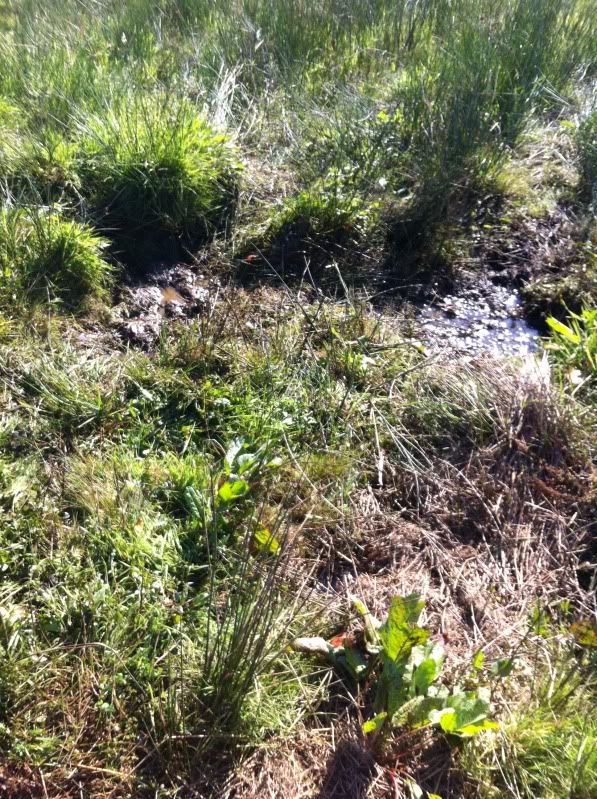
We moved in the first week of September 2013 when the UK was enjoying a few weeks of sunny weather. It seemed hard to believe after the dreadful Winter 2013/14 that we could have a day without rain. I had noticed, however, that my dogs, whilst exploring the paddocks, had located some patches of stagnant water. Bearing in mind it hadn't rained for a few weeks, it was obvious there was a source nearby.

One of the many boggy patches


It was whilst reading the first few chapters of the book, wherein the author describes the property, much as I am attempting to do, that I read mention of a spring in the upper paddock (although he referred to the field by a different name, the farm of his youth having had far greater reaches than the portion we occupy). His description was accurate enough to make me start investigating so the following day I resolved to make a start in locating the spring.

More standing water

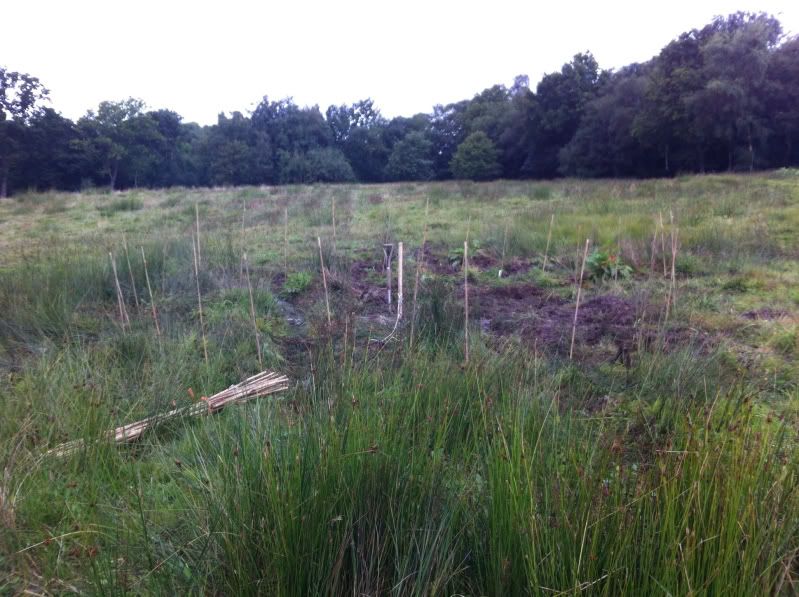
A cursory inspection of the land showed no obvious source but there was an extremely boggy patch in the position he had described. I stuck a pole into the soil where I gauged an approximate centre to be and marked out a circular area of 5m diameter. With the help of my new spade, I began to dig...

Bamboo henge!

A few days/weeks passed and the hole I had begun digging was getting larger and larger.

The pond grows

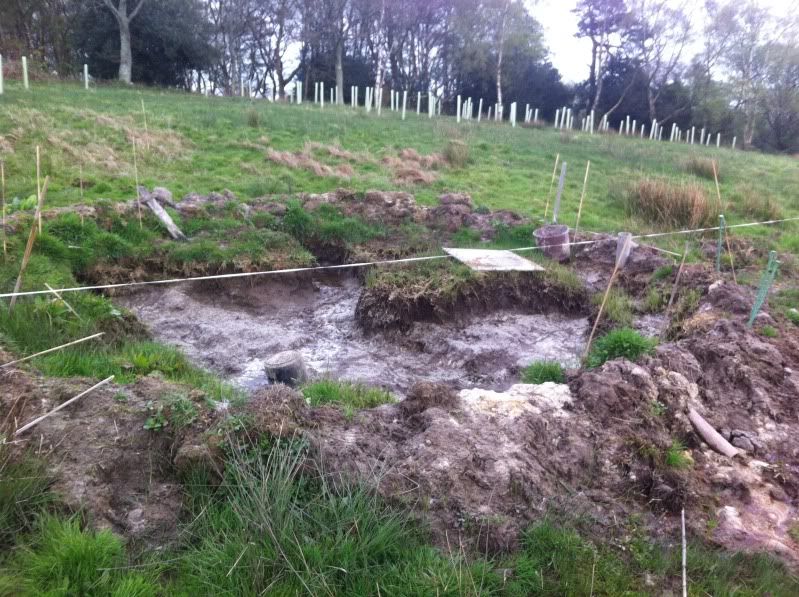
There were places where the water was seeping through the soil and collected in the base but I had yet to find any evidence or a spring head. It was almost completely by chance that I began to excavate a particularly soggy spot by hand (having broken my spade handle in trying to lever out a heavy chunk of root filled sod) that I stumbled across a plastic pipe, buried about 2 feet down. Subsequent investigation with drain rods led to a stoppage some 8 feet up the pipe but once I had dug sufficient clearance, there was a constant stream of water trickling from this pipe. As luck would have it, the pipe entered by circle right on the edge but didn't lead anywhere and so the water just soaked into the soil and made it boggy. The rotting vegetation made the whole area smell of cow manure, even though no cattle had been grazed there to the best of my knowledge.

A note on soil substructure:

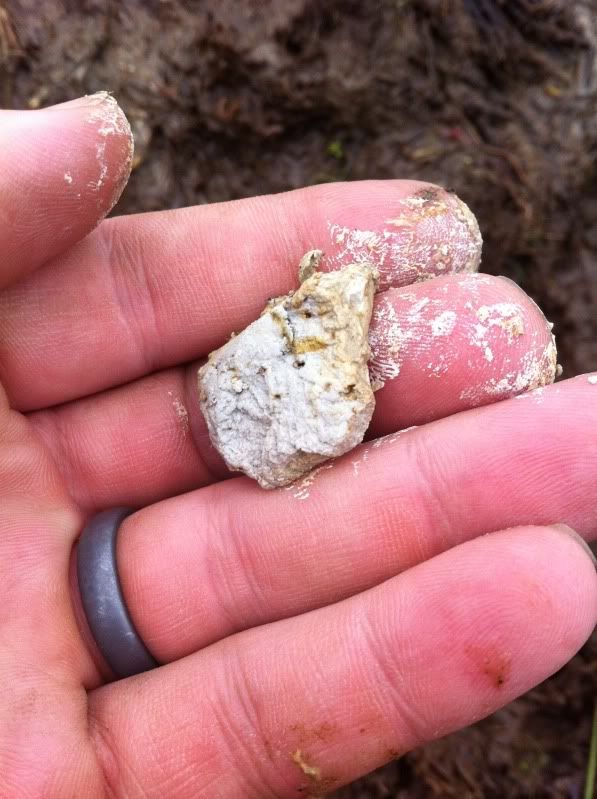
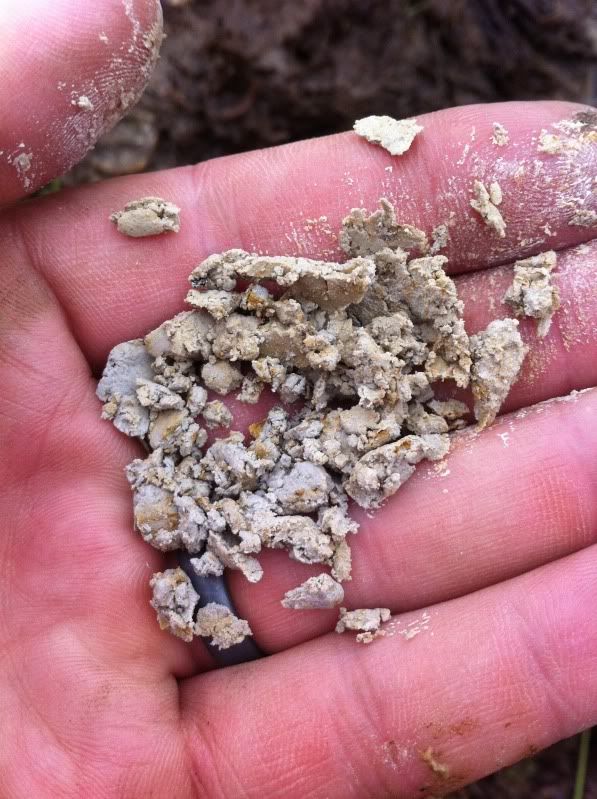
A spring normally appears when water meets an impenetrable surface, whether clay, rock or something else. When this layer gets close to the surface, which would normally be on a steep slope, the water bursts has nowhere to go but out of the ground which is where one finds a spring. In many cases, the underlying structure forms a channel that is sufficient to concentrate the water to a single point but in my case it's not quite so simple. The top layer is composed if thickly rooted peat. It's sodden and heavy and difficult to dig out. Below this foot-thick layer (and I apologise now for mixing my units in this blog but that's the English way!) there is some fairly sandy soil for about another 12 inches. Below this, and forming the impenetrable base layer, there is a substance known as "greensand". This is light grey in appearance, and superficially resembles clay in texture until one realises how it crumbles rather than squidges under pressure.

A lump of the sand...


...which crumbles, unlike clay
 

Drying out a portion of this leaves one with extremely fine sand which is enough to clog a filter without being quite as impervious as proper clay. As far as I can tell, because this substance isn't the perfect barrier as you might find with clay, the spring doesn't form from a single point but tends to seep out over a larger area. I will perform a "Mason jar test" in due course

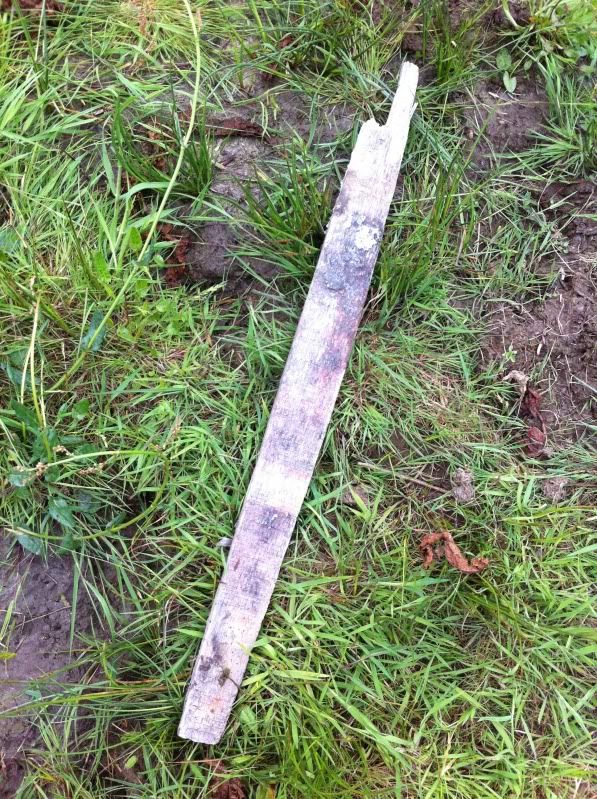
The book mentions that the author's father placed a wooden barrel over the spring to stop contamination from leaves etc. There is also note of a metal pipe running down to a storage tank. My diggings uncovered various pieces of wood, some of which were long enough to positively identify as barrel staves.

Barrel stave


I also found the original iron pipe, rusted solid and it was broken whilst being dug up. I also found several sections of ceramic land drain (short lengths of terracotta pipe that are laid end-to-end, the gaps in-between serving as an entry for excess water in the soil). I followed these the best I could until they came to an end about 2m outside my 5m circle. They were all clogged with fine sand and several had been crushed or moved out of line. Whether they originally extended further down the hill, I don't know although it was confirmed to me in correspondence with the author of the book, Robin Armstrong Brown, that his father had laid them. There was no sign of the metal tank, although there is a zinc coated water tank behind one of the stables which could have been of a similar type.

The plastic pipe, which was obviously a much later addition from a time after the book ended (I estimate some time in the 1980's - it's metric, 100mm) and the terracotta pipes (2") looked like they converged at the same spot. As I mentioned before, the plastic pipe was blocked further up. I duly dug down to find the other end and eventually uncovered it. It led to a load of rubble, mainly red bricks, and I am led to believe that a previous owner had most likely dug out a large area and backfilled it with rubble to stop it silting up and piped the excess off. For whatever reason, the whole area has been filled and levelled but without a full path for the water down to one of the ditches it has resulted in much of the paddock becoming a quagmire.

I elected to excavate the entire circle into a pond which would form a convenient place for the dogs to swim on a hot day as well as providing an alternative water source for the house, should we need it. My plan is to pipe the overflow down into the ditch which would be dammed further downstream. The overflow from this dam would then be piped into the pond in the lower paddock, which would be subsequently enlarged, to an acre or so, providing a picturesque and useful lake which could be stocked with fish or waterfowl.

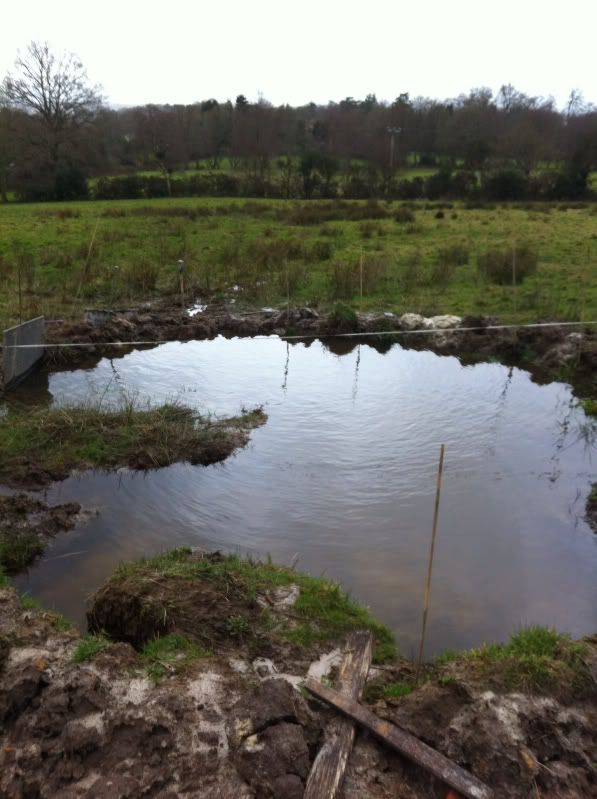
A quick calculation after a period of fairly heavy rain showed that the outflow from the pipe was aroudn 3,000 gallons a day - this is likely to fall during the summer but if I dig the entire 5m circle to 2 feet deep, the pond will only hold about 2,700 gallons, which means it should fill up in a day:

Pretty full


The above picture shows the pond partially filled. On the left of the picture is a piece of board that I was using as a temporary dam. Behind this I've started digging a trench (following the line of the white tape you can just see) - this will form the overflow into the ditch.

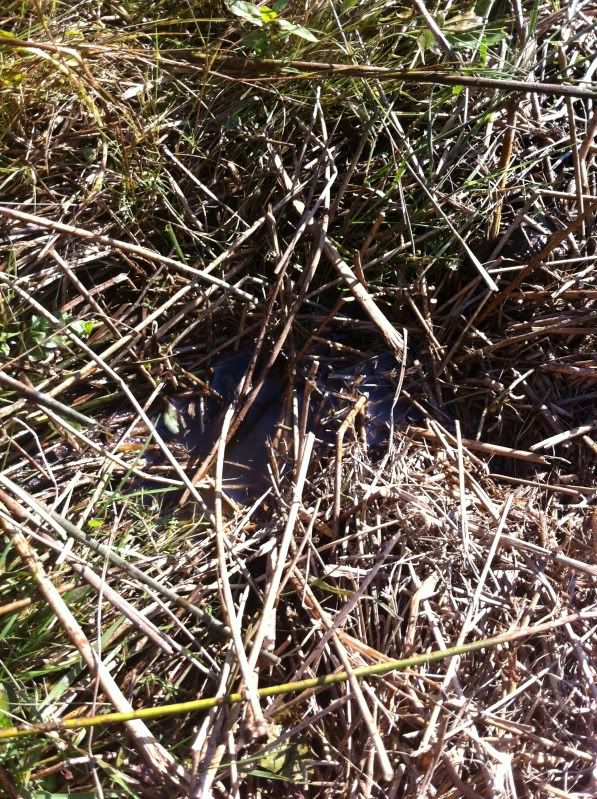
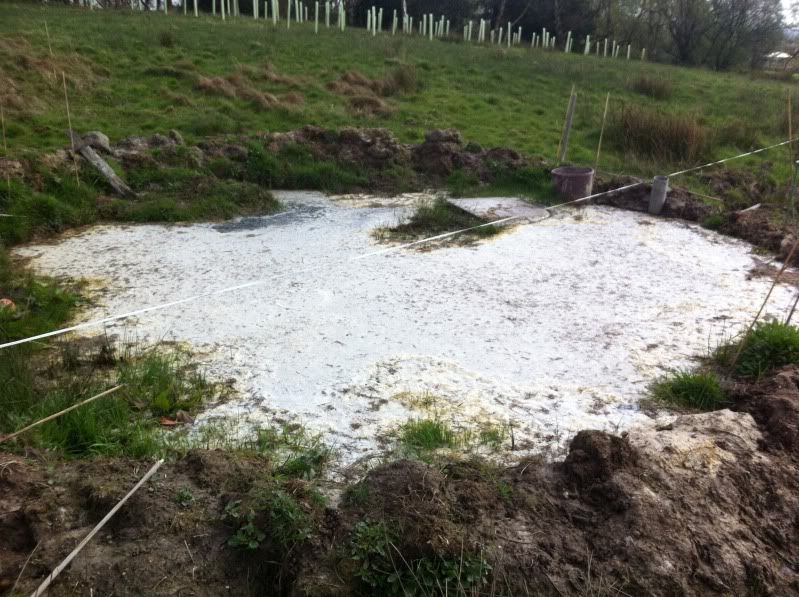
Due to the amount of rotting vegetation, at the moment the pond does tend to get covered in foam, caused by DOC (dissolved organic carbon). It's a bit unsightly, but completely natural and once I get some aquatic plants/animals in there, I should be able to keep the water clear:

DOC - dissolved organic carbon foam


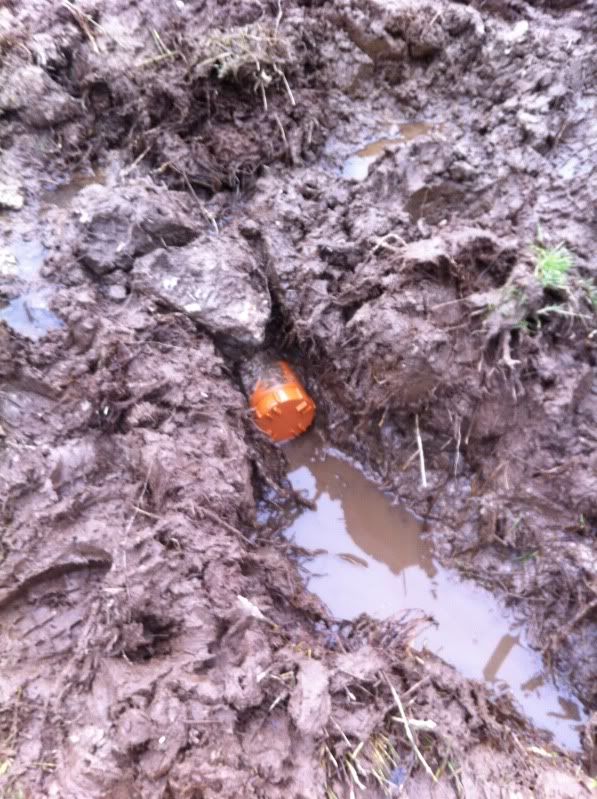
Because the pond is a work in progress, and I have planted a lot of tree down the hill, I needed a way to drain the pond so I can deepen it and water the plants underneath. With this in mind, I buried a piece of plastic drain pipe with a cap on it.

Unscrew me to unleash Hell!


Unscrewing the cap causes the entire contents of the pond to rush out in a torrent, taking a lot of mud with it, that gets deposited into the paddock below. I've also dumped some weeds into the water to drown them with the hope that is turns the entire pond into a big tank of compost tea!

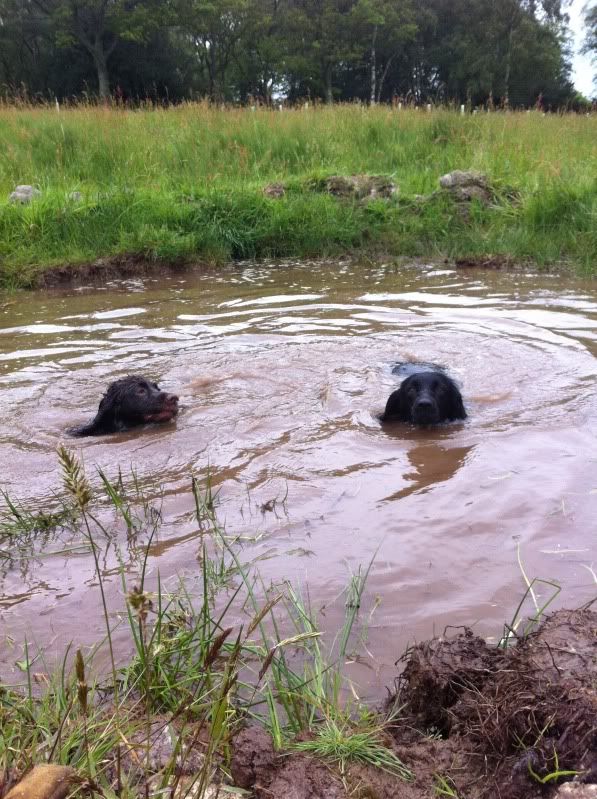
It also helps to send some helpers in to stir the silt up before draining it:

As Dog intended


Sunday, 1 September 2013

The Proposal

How did I end up in this situation?

My wife and I were living in a small house in the SE, with our daughter where we had been since October 2007.

In January, 2013, my wife came to me with a proposal. She explained that her mother had approached her to gauge my reaction to the following:

My father-in-law had suffered a heart attack in the past and just after our daughter was born, he was subjected to a triple bypass. Although this had made him feel a lot better than he had done for a number of years, he had been forced to change jobs from plumbing to working in a showroom, a job he didn't enjoy. It was making him very stressed and upset. 

My mother-in-law, a nurse, had faced the realisation that her husband probably wouldn't live to a ripe old age (both his siblings having died), didn't want him to spend the rest of his life being in a job he hated and so stressed it would probably shorten his lifespan anyway. Still having a mortgage outstanding, retiring early wasn't an option. so she asked whether we would consider selling our house, pooling our money with them and buying a larger property, with an annexe for us all to share.

Not thinking I'd be prepared to take that step, she was surprised when I agreed and after a very long and difficult conveyancing process (which I am not going to detail here), we finally moved into an old farm that came with just over 10 acres of land.