As I alluded
to before, I had always wanted my own woodland, for various reasons, amongst
them being a source of fuel, a place to camp and a place to reconnect with
nature. My interest in bushcraft had only increased my want for a place of my
own that I could manage to my own ends. Unfortunately, apart from the small
orchard and numerous trees around the perimeter, there was no woodland
associated with the property. With little money spare and with the neighbours
being in no mood to sell me their woodland, I had no option but to plant one
from scratch.
Some
searching around for assistance led me to the Woodland Trust MOREWoods scheme
(see Links). This is an initiative set up by the Woodland Trust in order to
create more woodland in the UK and comes in the form of a substantial discount
on the purchase prices of young trees and the necessary protection they would
need to avoid predation by deer, rabbits and other creatures.
A few e-mails
and phone calls later, I had a visit scheduled by one of their representatives
who would survey the site and advise on species and quantity of trees for my
new woodland.
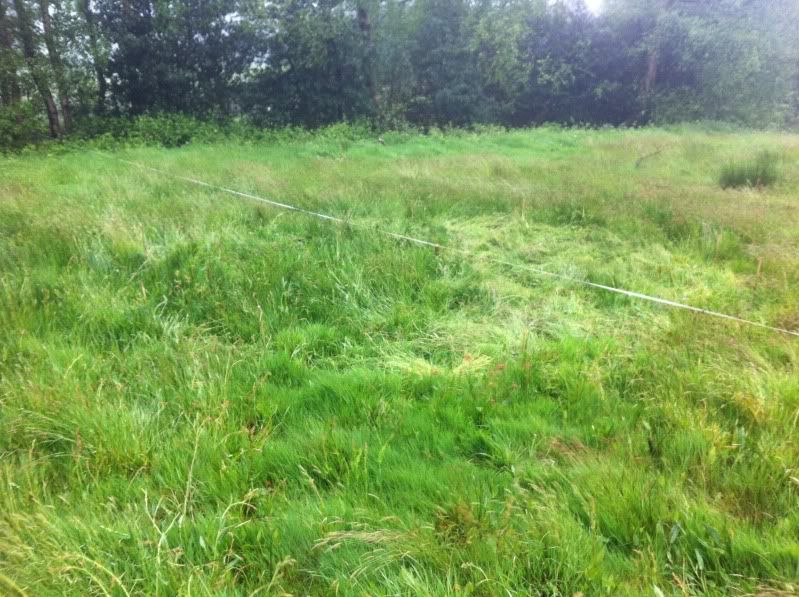
The Woodland
Trust representative, Luke, arrived and we walked the pasture together. He had
a fair knowledge of tree species but explained that there was only a limited
number of species available, all native trees. He promised to come back with a
quote in a few days.
The quote
duly arrived and was for 4,500 trees, including a lot of willow and birch. As
much as I like birch, the wood rots very easily and there was plenty around,
including a huge one that had recently fallen down (conveniently it was one
that was leaning on another and I was going to have to pay a tree surgeon to
drop it but the storms over the Winter pushed it to the ground and I spent a
few days clearing up the remains with a chainsaw). Willow, of many species at
least, takes root extremely easily from cuttings and I was reluctant to pay for
bareroot cuttings - especially for Goat willow (salix caprea) that is not of
great value either for timber or for weaving/ living structures. The inital
plan was to blanket the entire upper paddock with trees, as well as planting
some clumps in the lower paddock. Discussions with family, colleagues and
on-line made me reassess my plans and leave a significant amount of pasture
free from planting, in order to graze animals if required. A few unexpected
large bills also made me nervous to commit to such a large order and the Trust
was happy to amend the quote to 1,500 trees, as well as amending the selected
species.
The species
selected were as follows (numbers in brackets were final figures):
|
Species
|
Number
|
Notes
|
|
Alder
|
300 (375)
|
I selected alder
because it thrives on damp ground, grows quickly, coppices easily and
provides excellent firewood once dry. The charcoal is said to make the best
gunpowder and the roots form nitrogen fixing nodules that will help to
improve soil conditions. The lack of sweet chestnut and whitebeam is the
reason for the increased order
|
|
Aspen
|
50 (75)
|
The Latin name for
Aspen is populus tremens – the trembling poplar. This is because the
cross section of the leaf stalk is rectangular and thus makes the leaf flutter
from side-to-side in the wind, a very attractive sight on a mature tree. I
had also read that as a pioneer species, aspen is not fussy about soil type and
grows rapidly. The whitebeam order was split between alder and aspen
|
|
Beech
|
125
|
Not traditionally
associated with damp soils but there is an enormous beech tree over the fence
on a neighbouring property. Makes for an attractive tree and provides good
timber when mature. I had originally wanted copper beech for the pretty
foliage but these weren’t available.
|
|
Blackthorn
|
50
|
I wanted this for the
sloes (sloe gin anyone?) and the blossom.
|
|
Crab apple
|
50
|
There was a single,
mature crab apple in the hedgerow and as well as providing a useful fruit,
full of pectin for jam-making, it has pretty blossom
|
|
Field maple
|
100
|
I had queried why
sycamore wasn’t on the list but was told it was an invasive species.
Subsequent research doesn’t really support this theory but the field maple is
an attractive tree nonetheless and I have since been offered no end of
sycamore seedlings should I want them. I’m hoping once mature the sap may
prove to be a good source of maple syrup, although the species used for this
in Canada is the sugar maple, acer saccharum
|
|
Hazel
|
150 (200)
|
The Woodland Trust
considers this to be a shrub rather than a tree, which surprised me as a
friend’s woodland has some very large examples. Selected for the many uses of
coppiced product, pea sticks, hurdles etc. and also for the nuts. Makes
excellent firewood which is why I increased the numbers at the expense of
hawthorn
|
|
Hawthorn
|
150 (125)
|
I must admit to being
a bit sneaky here. I like hawthorn, it has pretty blossom, the fruits are edible
(as are the new leaves in Spring) and it provides some of the best firewood
although you don’t see many large examples around. I wanted to extend the
hedge along the road up alongside the drive. The thorns on hawthorn make for
excellent security and it’s most often found in hedgerows. There are some
larger examples on the property that I presume grew from unmanaged hedges. As
it turned out, my calculations showed that I would need far more than this
for a high density hedge so I ordered and planted a few hundred before these
ones arrived
|
|
Hornbeam
|
50 (75)
|
A great firewood and
also used to make cog teeth in water mills. Like beech it often keeps its
leaves on in the autumn which is why it’s often planted as a hedge. There is
a single example in the hedge already
|
|
Pedunculate oak
|
125
|
What tree symbolises
England more than the mighty oak? There are many large examples around the
perimeter but many have been cut down nationwide to provide timber for
building ships and houses. Although taking an age to season (3 years is
best), the firewood is great. We’ve got some different species of oak on the
property which I’ve yet to identify and have many seedlings sprouting up from
the bumper crop of acorns in the past autumn
|
|
Scots pine
|
25
|
The road on which our
property sits used to have a long plantation of Scots pine along it (over the
road). They were cut down before WW2 and we have a single example dominating
the corner of the lower paddock. My fancy was to grow two circles of pine
trees, to provide a focal point should we be holding camps here in the
future. The remaining tree will be planted somewhere else.
|
|
Spindle
|
50
|
The berries of the
spindle tree look delicious but sadly they’re poisonous to humans. Pretty,
though, and the birds can eat them. Planted for this reason. It’s listed as a
shrub
|
|
Sweet chestnut
|
125 (0)
|
We have 2 on the
property and although it’s one of the best trees to coppice, I am reluctant
to chop them down. Sadly, the nursery was out of stock for the final order
but there are plans to plant many more next year, for timber and nuts
|
|
Whitebeam
|
50 (0)
|
Initially ordered for
variety and the attractive berries, subsequent reading made me nervous that
they wouldn’t like our acid soil, preferring alkaline, dry conditions so I
subsequently changed the order
|
|
Wild cherry
|
125
|
Planted for the
blossom as well as the fact it likes damp ground and provides good firewood
|
The Woodland
Trust initially suggested quite large number of dog rose (rosa canina) but
I’ve always seen this as a climber in hedgerows. I’m hoping to propagate some
later in the year for planting in the hedges. The blossoms are beautiful and it
helps to make an impenetrable hedge – not what I’d consider suitable for a
standard tree. They also suggested holly but as we have plenty already, I
decided not to plant any more. It’s certainly attractive throughout the year
and supplies pretty berries for Christmas but I am reluctant to have spiky
species in my woodland – there’s enough brambles around for that!
Other trees I
wanted included ash, fraxinus excelsior, but due to the risk of hymenoscyphus
pseudoalbidus (formerly known as chalara fraxinea) in the UK, this
fast growing firewood species was not offered, and wild pear, for the blossom
and fondness for damp ground. This wasn’t on offer for some reason but
hopefully I can plant some next year.
A note
on firewood
A cursory
search on the Internet for firewood suitability will bring up variations on an
old poem which gives erroneous information on which wood is best to burn. The
fact of the matter is, any wood, once dry, will burn and give out plenty
of heat. Willow and alder, for example, have a high water content so take a bit
more drying and since they grow fast, they won’t burn for as long as, say, oak,
but there are plenty of tree surgeons out there who heat their homes on wood
considered low quality. Green oak burns like asbestos (i.e. doesn’t) but
biomass plants use predominantly willow