Showing posts with label trees. Show all posts

Friday, 19 September 2014

The Grand Tree Survey

It's been a while since my last post, sorry about that!
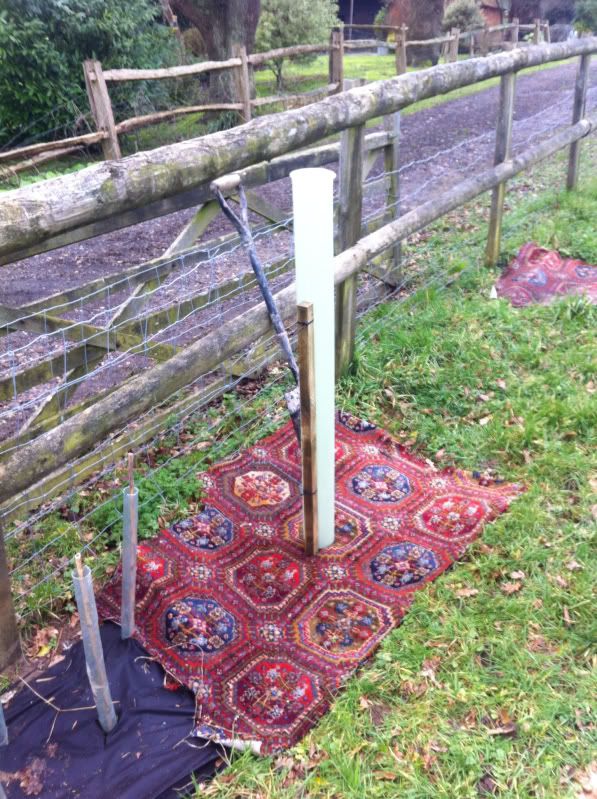
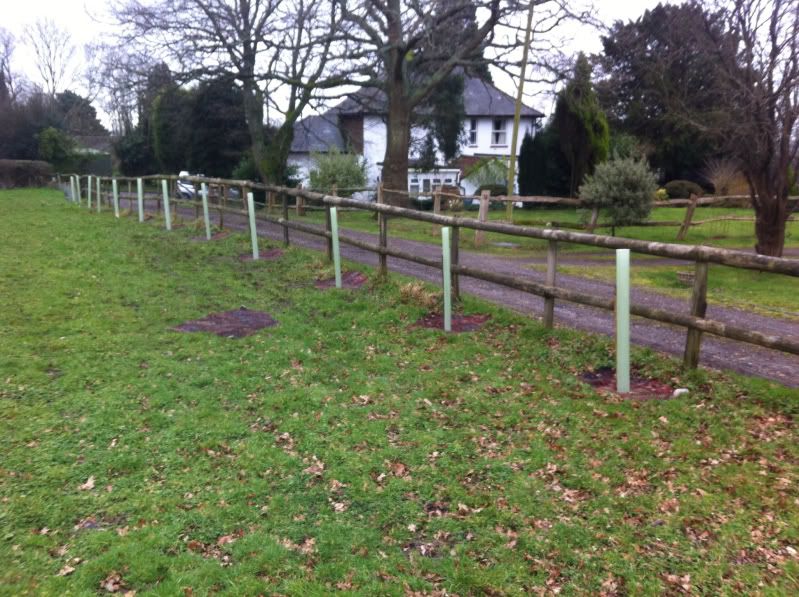
As part of my agreement with the Woodland Trust, I have to replace lost trees (subject to an acceptable 20% loss) so thought it best to have a record of how my trees are doing.
I'd previously marked a few tubes with red flag, made from wire and tape, but the numbers didn't last and it wasn't a very organised approach.
Whilst looking for numbered tags, I found a company online that produces personalised cable ties so I ordered 200, hoping that I wouldn't need that many. They also had an option for a company name, which I took:


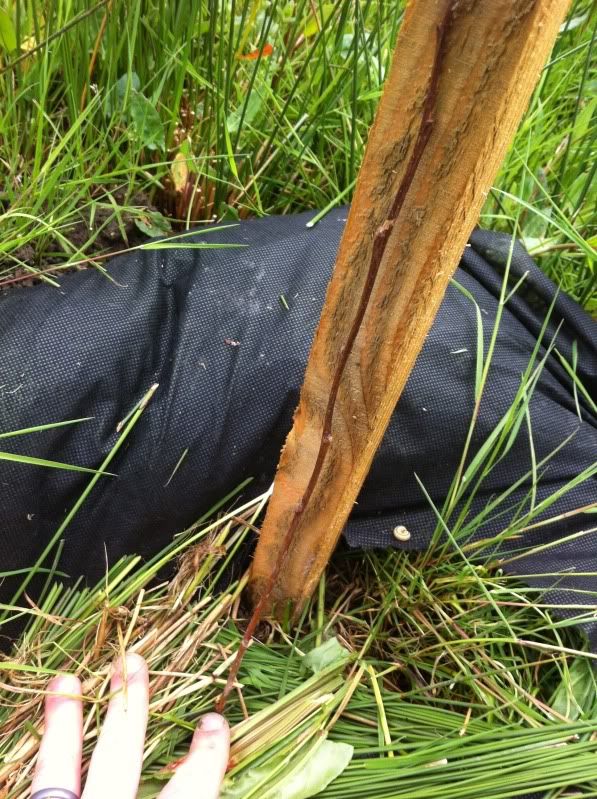
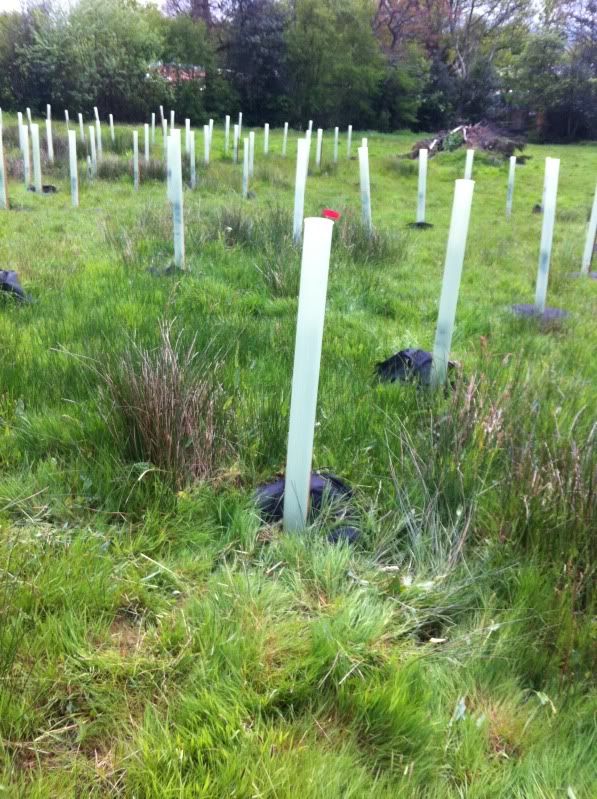
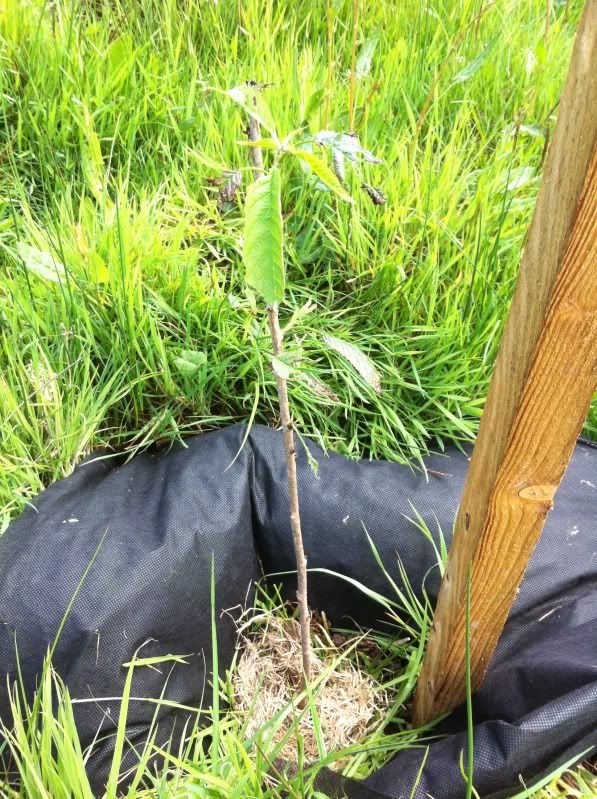
I constructed some survey tables and printed them off. In the space of a few days I'd looked down every tube and counted every spiral. It was a bit difficult identifying some of the trees now the leaves have fallen (and working out what the dead ones should have been was especially hard) but I finally finished surveying the lot (over 1500) and am proud to announce that only 65 didn't make it, a loss rate of about 4%. I'm planning on "beating up" those that need replacing, with sweet chestnut and wild pear. The latter liking heavy soil and the former being unfussy about soil types.

I'll publish the full data list in due course.


Wednesday, 21 May 2014

Willionaires

Willow gets me excited.

As a lazy man, planting and tending trees was a serious effort and the speed at which willow grows is amazing, which is why it’s planted for biomass in many parts of the World. To grow willow could hardly be simpler. For most species, you buy (or acquire) a stick, called a rod, about the size of a pencil. As the name suggests, you stick this in the ground and voila! A willow tree ensues. It’s so potent and ready to root that an infusion made from bits of willow wood soaked in water will stimulate many other plants to root, saving money on expensive hormone powders. It’s good for feeding livestock as well as having multitudinous other uses, such as weaving and forming living structures.

To give you an idea how rapidly it can grow, in my old house, there was a willow tree (I think it’s osier viminalis – common osier – but possibly hybridised with something as I’m sure the leaves were variegated) planted in the flowerbed next door. It provided too much shade for the occupants and I was asked if I could trim it in exchange for keeping the trimmings. Not the best deal in the World, you might say, and you would be right but I kept on top of it for a couple of years. One year, I was getting tired of individually sawing through the shoots that were too thick to cut with secateurs and knowing that it wasn’t a well loved shrub, I too my chainsaw and cut the thing down to a stump, about as flush to the ground as was possible. The sad stump sat there for the Winter. We has assumed that it was dead and weren’t particularly bothered. However, in the Spring, small green shoots started to appear and by the end of that year, they were up to 3m long and 30mm in diameter. IN. ONE. YEAR. I’ve taken many of these trimmings and planted them at our current property where they are doing very well, although as not coming from a well established stump, I don’t expect they’ll produce the same growth this year.


Osier viminalis

Some economics:
To buy a stick of willow on eBay, for example, costs around 50p. You can find it cheaper but you can pay a lot more.
Now. To encourage willow to produce straight shoots, it is desirable to plant them close together at, say, 50cm (0.5m) spacings. An acre is 4,047m2 which, if square, is roughly 63.5m along each side. Planting a stick at every half metre would give 128 plants along each side, a total of 16,384. If each of these plants put out 10 shoots (whips) of 2 metres each, and each shoot was cut into 25cm length that would mean 80 rods per plant. In one acre, that’s 1,310,720 rods, which at 50p each, is £655,360. Per acre. Per year. The willow I cut down produced many more shoots that this – I reckon I planted about 400 rods and had many longer whips left over which I stuck in the ground for want of something else to do with them. Now, I hear what you say, selling that amount in would not only be difficult but would also attract some sort of bulk discount. Let’s say you sold the lot at 10p each. That’s still £130,000. Obviously, you’d need some sort of harvesting and cutting equipment in addition to the handling/postage costs but you can see why I asked my father-in-law, after pointing out we owned 10 acres “What colour helicopter would you like?”*

* the difficulty being that we’d have nowhere to land them as all the land would be covered in willow

Regarding biomass, we are accustomed to burning logs in this country, either on an open fire or in a woodburning stove. With a quick growing species such as willow, you might get a reasonable sized log in about 4 years, which then should be dried for a year or so before burning. Why, then, should one not be able to produce meaningful heat from the smaller shoots that we could harvest every year? The solution lies in a device known as a rocket stove, but I have only found one commercially produced version – the Stick Stove, from Black Mountain Wood Fuels (see links). However, I don’t consider this to be a very attractive stove and it’s quite a lot of money, but you must admire the technology. I am working on a similar stove, designed to work inside an old oil-fired Rayburn that we were given. Hopefully I can be burning my own willow soon and heating my workshop (unless I can convince my wife to let me put it in the house).

Tuesday, 6 May 2014

List of tree species at The Old Farm

Species Latin Name Approx number Notes
Ash Fraxinus excelsior 6 Only young saplings
Alder Alnus glutinosa 375 Introduced 2014
Apple Malus domestica 4
Aspen Populus tremens 50 Introduced 2014
Balsam poplar (we think) Populus balsamifera 2
Bay Laurus nobilis 3
Beech Fagus sylvatica 126 most introduced 2014
Birch Betula pendula 50
Blackthorn Prunus spinosa 50 Introduced 2014
Cobnut Corylus avellana 1 Introduced 2014 (if you count it as a different species to hazel)
Common osier Osier viminalis 100 Introduced 2014
Copper beech (2014) Fagus sylvatica 1 Introduced 2014
Crab apple Malus sylvestris 51
Damson (2014) Prunus institia 1 Introduced 2014
Elder Sambucus nigra 15
Eucalyptus Eucalyptus gunnii 1
Field maple Acer campestre 100 Introduced 2014
Willow, goat Salix caprea 3
Gorse Ulex europaeus 50
Willow, grey Salix cinerea 30
Hawthorn Crataegus monogyna 300 200 introduced 2014
Hazel Corylus avellana 201 200 introduced 2014
Holly Ilex aquifolium 30
Hornbeam Carpinus betulus 76 Introduced 2014
Leylandii Cupressus × leylandii 10
Medlar Mespilus germanica 1
Oak (Pedunculate) Quercus robur 150 Possibly some sessile
Pear Pyrus communis 3 Not sure of exact species
Plum Prunus domestica 2
Privet Ligustrum vulgare 1
Rhododendron Rhododendron ponticum 3 Behaving at the moment
Rowan Sorbus aucuparia 5
Scots pine Pinus sylvestris 26
Spindle Euonymus europaeus 50 Introduced 2014
Sweet chestnut Castanea sativa 1 more planned for 2015
Sycamore Acer pseudoplatanus 2
Wild cherry Prunus avium 125 Introduced 2014
Yew Taxus baccata 3 One of which is c. 400 years old
That's 38 different species (if you count hazel as two), well over 2,000 trees (if you count them all as trees - they're all taller than I am). There are some further ornamental trees that I've yet to identify and I seem to discover new trees every day tucked inside the hedgerows. Can't wait for most of them to grow bigger!

Friday, 2 May 2014

Willow deer damage

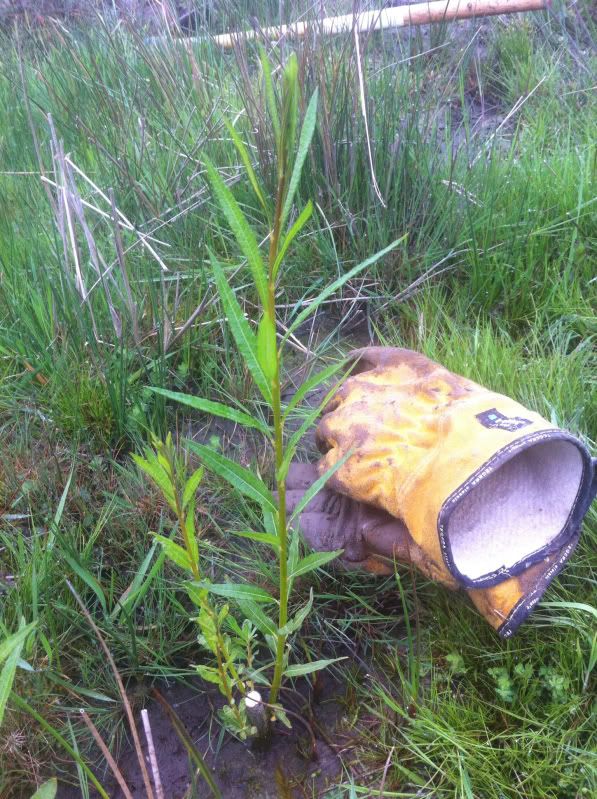
Here is some common osier willow, osier viminalis, that I think has been damaged by a deer. Need to set up the wildlife camera in case they strike again!

Common osier willow deer damage

These were shoots I had pruned from our next door neighbour in our old house. She had asked me to trim the shrub as it was blocking out quite a bit of light. I eventually got bored with cutting each individual stem and cut the entire thing to the ground with a chainsaw. Within a year, the new shoots were up to 3m long and 3cm thick - remarkable stuff and good for weaving/structural work. I've stuck a load of 25cm cuttings into the ground and most of them have taken, the tallest being about 60cm high. The gloves in the picture are Tegera 17 cut resistant gloves, available from Cromwells, they're the best all round gloves I've found so far.

Osier viminalis


We also planted some in an organised plantation in spirals and they seem to be doing very well indeed. As from today, 4 plants (out of 64) had grown taller than the 60cm spirals. We've also planted some yellow willow but it's not doing so well as yet.

Osier viminalis


It's so easy to propagate that I'm not worried about the damage - I'd only stuck the damaged shoots into the ground as had got tired of planting the individual sticks but didn't have enough to build anything meaningful with


Emergency mulching

I had become to suspect that some of my trees had died. After some discussion on various forums, I decided to have a closer look at the victims.

Whilst looking down the tube showed no growth, taking the tube off revealed a small amount of growth from the base of the tree (all alder, so far):

A barely living alder


To try and remedy this, I ripped out all the grass and weeds that were growing around the stem and shading it out. I then laid these down around the stem, making sure to keep the new growth uncovered. The tube is then replaced to hold the mulch in place and marked with a flag so I can keep tabs on it.

Can you see the flag?


Unfortunately, some of the trees that had been showing great growth have been attacked by some beastie and are now looking a bit sorry for themselves. This wild cherry, for example:


Wednesday, 23 April 2014

Willow Progress


The willows I pollarded in the Winter are covered in newgrowth and the dead hedge is anything but...


Pollarded willow


...


Dead hedge


The willow plantation is beginning to show some decent progress too (it seems that the yellow willow sticks we planted didn't make it* but the osier is doing well and should make for some decent weaving/structural material)


Willow plantation

* actually, they were a bit slow on the uptake but grew quite well in the end

Wednesday, 16 April 2014

The Epiphany

Despite wanting a woodland, for fuel and somewhere to wander about in, I hadn't given the subject much thought after that.

It was during a bored moment that I was surfing YouTube and stumbled across a video that changed my life:


I don't normally watch videos that are that long but this one scared me. Scared and inspired. For the next few days, all I did was watch video after video and read countless pages of information. I've been introduced to the work of Martin Crawford and Geoff Lawton, amongst others.

For those of you who don't want to watch the video, I can try to précis. The presenter, Rebecca Hosking, is trying to see how her family's farm can survive well into the future, a future where the oil is running out. She points out that the UK is a net importer of food and that supermarkets hold on average 3 days worth. Add panic buying into the equation and that makes for some rapidly hungry people.

As the title of this blog suggests, I'm no hippie. I have a job, run several cars and heat my house (partly) with fossil fuel. I shop in supermarkets and buy a lot of stuff from China and elsewhere. I eat meat, processed foods and imported coffee. I wash fairly often (through laziness rather than design) but have my hair cut, by Donna.

It struck me that when I hear of people using the term "organic", it conjures up images of patchouli scented, pot smoking hippies who say "man" a lot whenever they're not hugging trees. Why should someone who doesn't wish to spread chemicals on the ground be labelled like this? By the way, if you've never hugged a tree, I can recommend it - it was a surprise to me how wonderful it feels, you can really sense the permanence of this huge, living thing. To love nature isn't a bad thing. 

I realised that what I really wanted in life was a forest garden. I'm very fortunate to have the land available and hopefully the time too. Being a prepper is all very well, but how much food can one realistically stockpile? To survive long term, we need to grow more food locally. England is well placed to take advantage of this. We have plenty of water, as most of us experienced this Winter, the Winters are generally quite mild - no snow this time around, in the South East - and the Summers aren't too hot. 

As Martin Crawford and others have pointed out, any piece of land in this climate is trying to revert back to forest. It's only by putting in large amounts of effort (using oil based machinery & fertilisers) that we can stop this process. By taking advantage of this inclination towards lush woodland, we can live more in harmony with the natural world, whilst still taking advantage of what it can provide.


Tuesday, 18 February 2014

The trees arrive

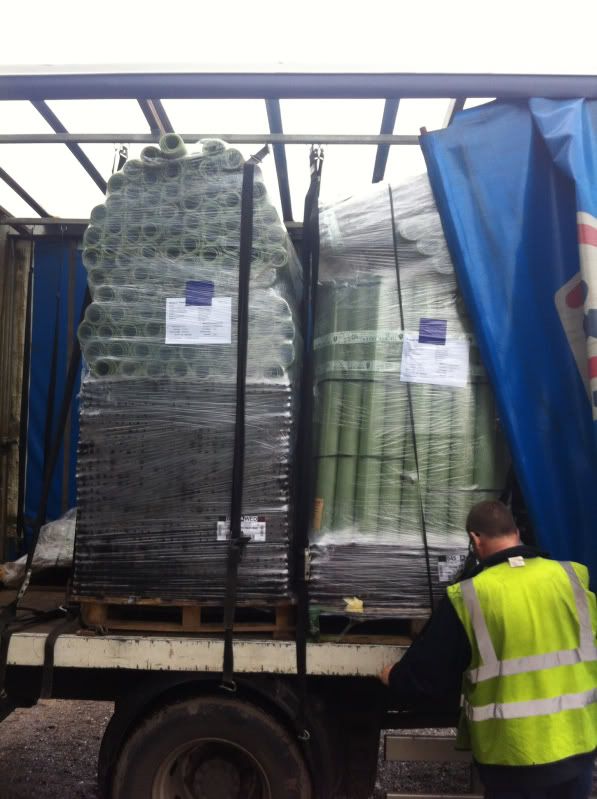
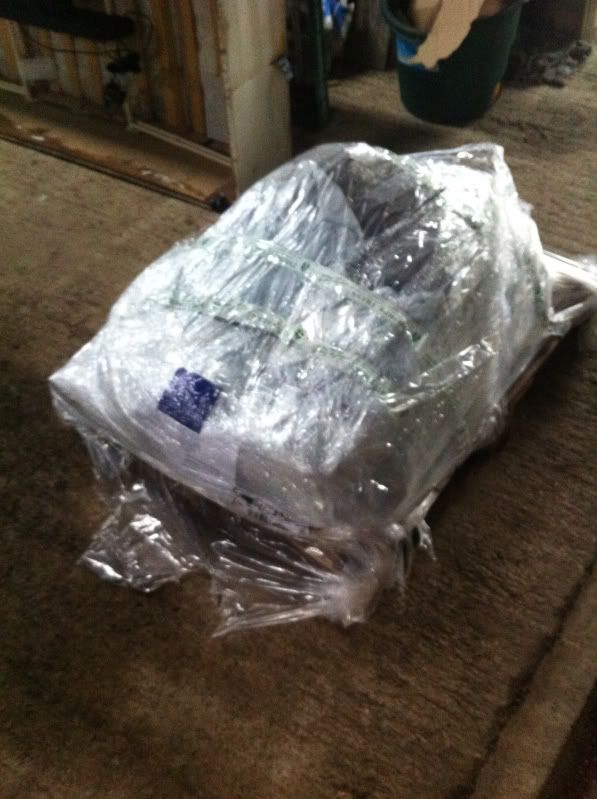
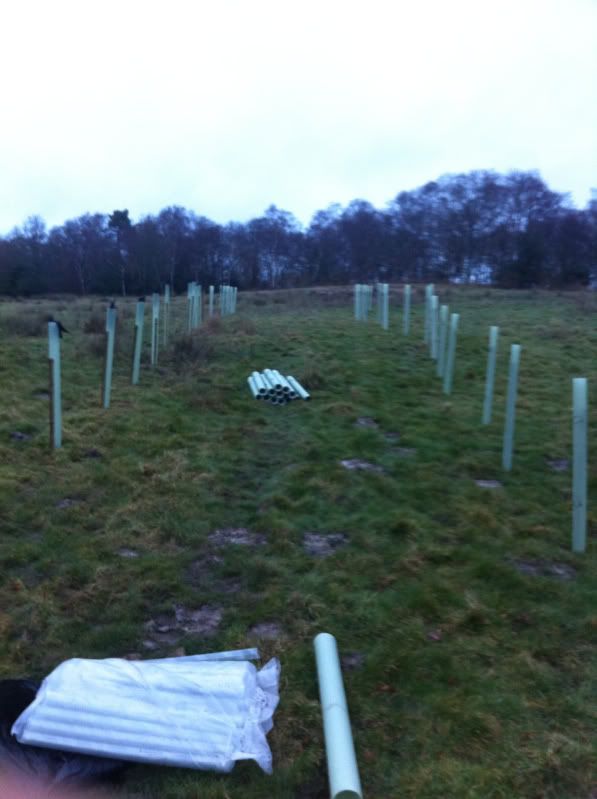
After what seemed like an age, the trees were delivered. Was a bit daunting to see how many tubes and stakes the order comprised! Thank goodness I didn't order 4,500 as suggested

The plants themselves didn't look too bad, how wrong I was:


Thought I'd better get cracking before my help arrived the following morning so planted 50 wild cherry trees. The first ones will form an avenue down the drive which should make for a beautiful arrival when in blossom.

First one!


I then continued planting the avenue


Once this was done, I moved into the upper paddock, where the real planting was going to take place. My wife suggested an avenue leading up to the pond would look nice, so that's what happened:


You can see how wet it is


Monday, 2 September 2013

The book and the spring

Sounds a bit like the the title of a story by Kafka but I can assure you that I possess few of his talents (as readers of this blog will testify).

On one of our visits to the property whilst in the process of buying it, the then owner showed us a book. Called "A Farmers Boy" it was brought to her attention by a friend who had noticed that it had a picture of her house on the front. It was written by a man who had grown up there during WW2 and contained a biography of his time there (and his family's subsequent departure). The owner, Jenny, told us that whoever ended up buying the house would find a copy of the book waiting for them. From that day onwards I was determined to read the book but positive that I would only do so once I received our free copy with the house.

True to her word, when we finally entered the now empty house on the day of completion, there was a copy of the book (next to a bottle of Champagne and a card). 

We moved in the first week of September 2013 when the UK was enjoying a few weeks of sunny weather. It seemed hard to believe after the dreadful Winter 2013/14 that we could have a day without rain. I had noticed, however, that my dogs, whilst exploring the paddocks, had located some patches of stagnant water. Bearing in mind it hadn't rained for a few weeks, it was obvious there was a source nearby.

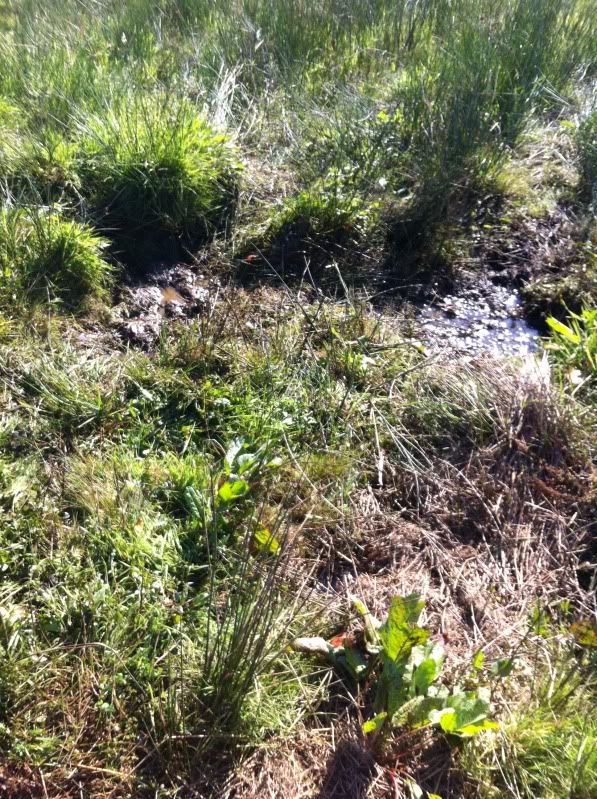
One of the many boggy patches


It was whilst reading the first few chapters of the book, wherein the author describes the property, much as I am attempting to do, that I read mention of a spring in the upper paddock (although he referred to the field by a different name, the farm of his youth having had far greater reaches than the portion we occupy). His description was accurate enough to make me start investigating so the following day I resolved to make a start in locating the spring.

More standing water

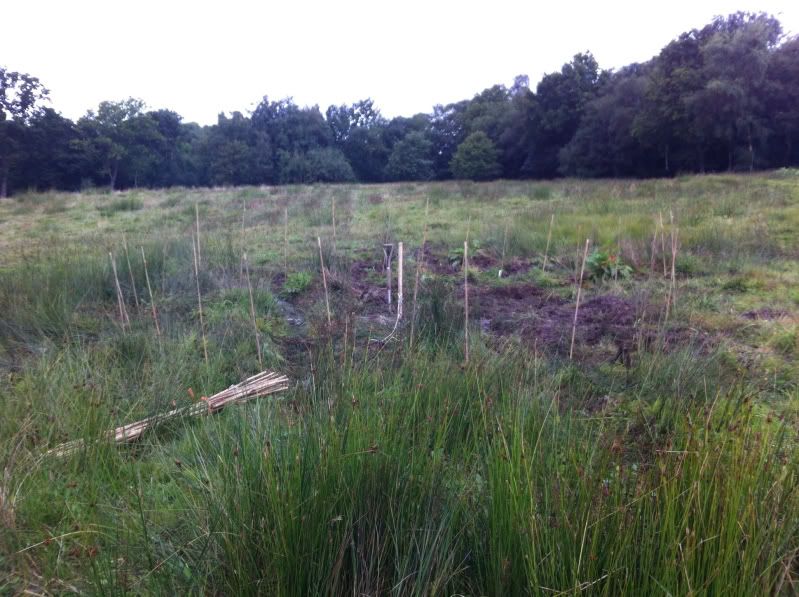
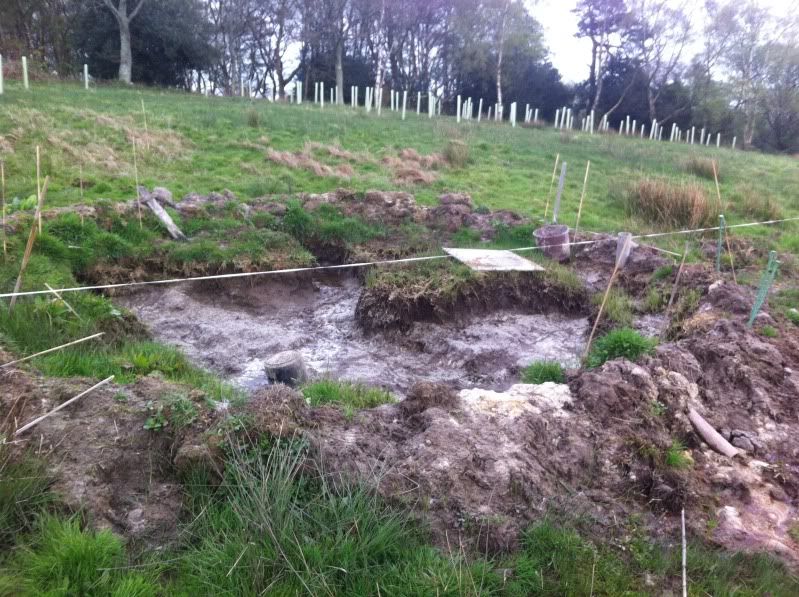
A cursory inspection of the land showed no obvious source but there was an extremely boggy patch in the position he had described. I stuck a pole into the soil where I gauged an approximate centre to be and marked out a circular area of 5m diameter. With the help of my new spade, I began to dig...

Bamboo henge!

A few days/weeks passed and the hole I had begun digging was getting larger and larger.

The pond grows

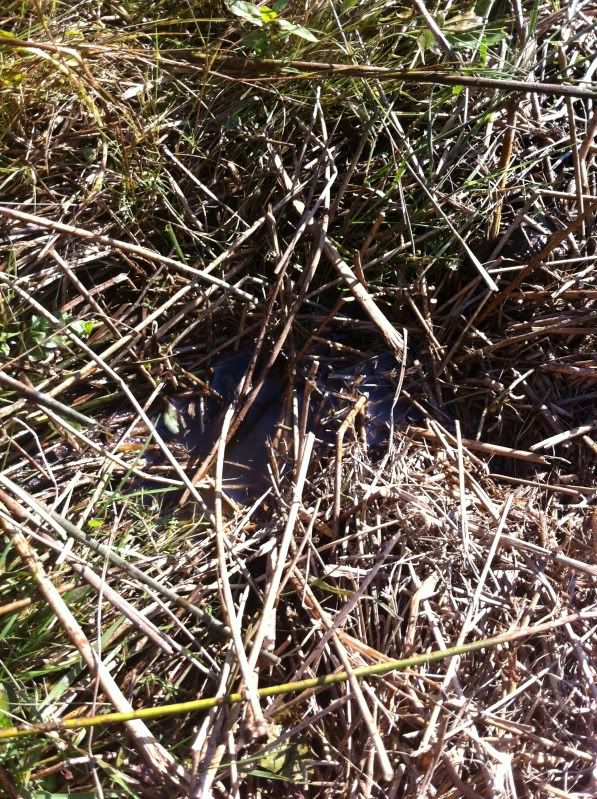
There were places where the water was seeping through the soil and collected in the base but I had yet to find any evidence or a spring head. It was almost completely by chance that I began to excavate a particularly soggy spot by hand (having broken my spade handle in trying to lever out a heavy chunk of root filled sod) that I stumbled across a plastic pipe, buried about 2 feet down. Subsequent investigation with drain rods led to a stoppage some 8 feet up the pipe but once I had dug sufficient clearance, there was a constant stream of water trickling from this pipe. As luck would have it, the pipe entered by circle right on the edge but didn't lead anywhere and so the water just soaked into the soil and made it boggy. The rotting vegetation made the whole area smell of cow manure, even though no cattle had been grazed there to the best of my knowledge.

A note on soil substructure:

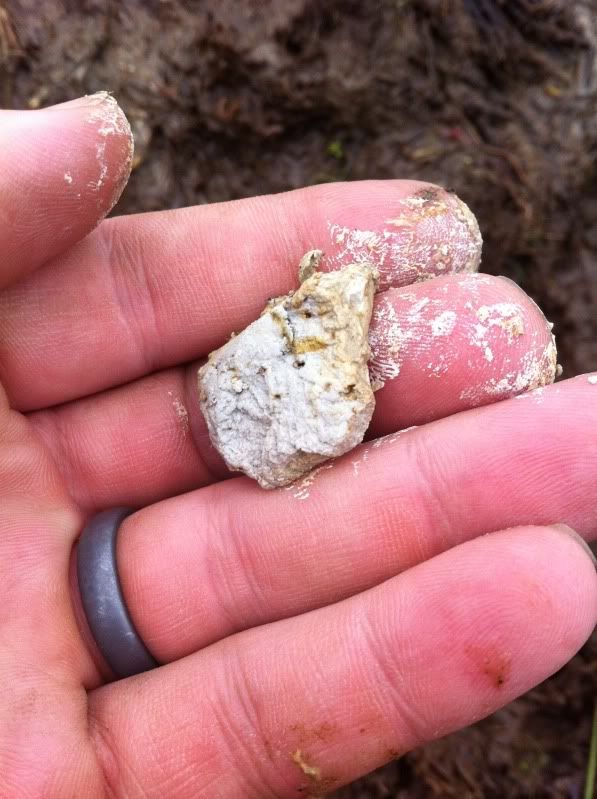
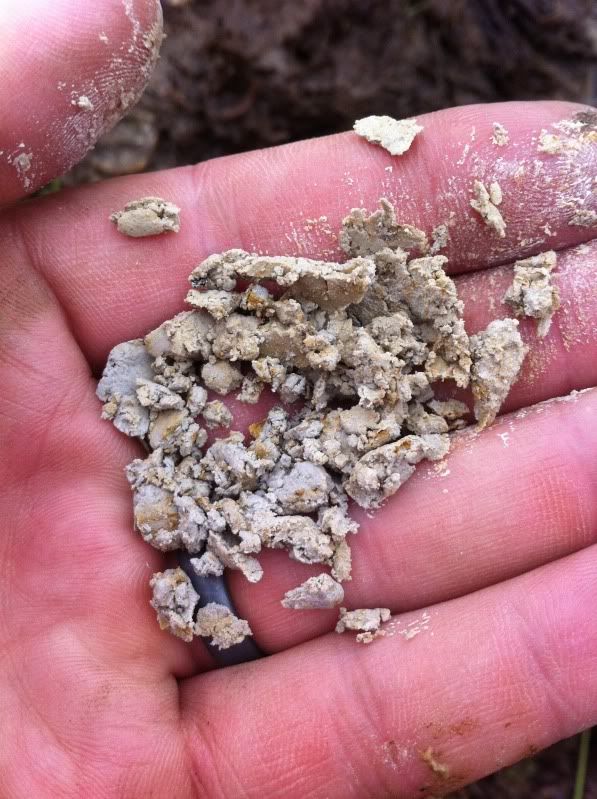
A spring normally appears when water meets an impenetrable surface, whether clay, rock or something else. When this layer gets close to the surface, which would normally be on a steep slope, the water bursts has nowhere to go but out of the ground which is where one finds a spring. In many cases, the underlying structure forms a channel that is sufficient to concentrate the water to a single point but in my case it's not quite so simple. The top layer is composed if thickly rooted peat. It's sodden and heavy and difficult to dig out. Below this foot-thick layer (and I apologise now for mixing my units in this blog but that's the English way!) there is some fairly sandy soil for about another 12 inches. Below this, and forming the impenetrable base layer, there is a substance known as "greensand". This is light grey in appearance, and superficially resembles clay in texture until one realises how it crumbles rather than squidges under pressure.

A lump of the sand...


...which crumbles, unlike clay
 

Drying out a portion of this leaves one with extremely fine sand which is enough to clog a filter without being quite as impervious as proper clay. As far as I can tell, because this substance isn't the perfect barrier as you might find with clay, the spring doesn't form from a single point but tends to seep out over a larger area. I will perform a "Mason jar test" in due course

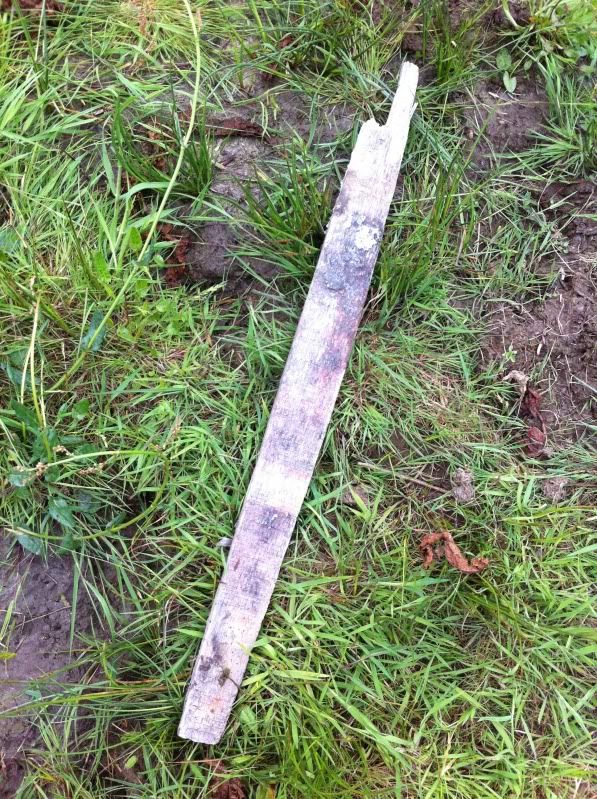
The book mentions that the author's father placed a wooden barrel over the spring to stop contamination from leaves etc. There is also note of a metal pipe running down to a storage tank. My diggings uncovered various pieces of wood, some of which were long enough to positively identify as barrel staves.

Barrel stave


I also found the original iron pipe, rusted solid and it was broken whilst being dug up. I also found several sections of ceramic land drain (short lengths of terracotta pipe that are laid end-to-end, the gaps in-between serving as an entry for excess water in the soil). I followed these the best I could until they came to an end about 2m outside my 5m circle. They were all clogged with fine sand and several had been crushed or moved out of line. Whether they originally extended further down the hill, I don't know although it was confirmed to me in correspondence with the author of the book, Robin Armstrong Brown, that his father had laid them. There was no sign of the metal tank, although there is a zinc coated water tank behind one of the stables which could have been of a similar type.

The plastic pipe, which was obviously a much later addition from a time after the book ended (I estimate some time in the 1980's - it's metric, 100mm) and the terracotta pipes (2") looked like they converged at the same spot. As I mentioned before, the plastic pipe was blocked further up. I duly dug down to find the other end and eventually uncovered it. It led to a load of rubble, mainly red bricks, and I am led to believe that a previous owner had most likely dug out a large area and backfilled it with rubble to stop it silting up and piped the excess off. For whatever reason, the whole area has been filled and levelled but without a full path for the water down to one of the ditches it has resulted in much of the paddock becoming a quagmire.

I elected to excavate the entire circle into a pond which would form a convenient place for the dogs to swim on a hot day as well as providing an alternative water source for the house, should we need it. My plan is to pipe the overflow down into the ditch which would be dammed further downstream. The overflow from this dam would then be piped into the pond in the lower paddock, which would be subsequently enlarged, to an acre or so, providing a picturesque and useful lake which could be stocked with fish or waterfowl.

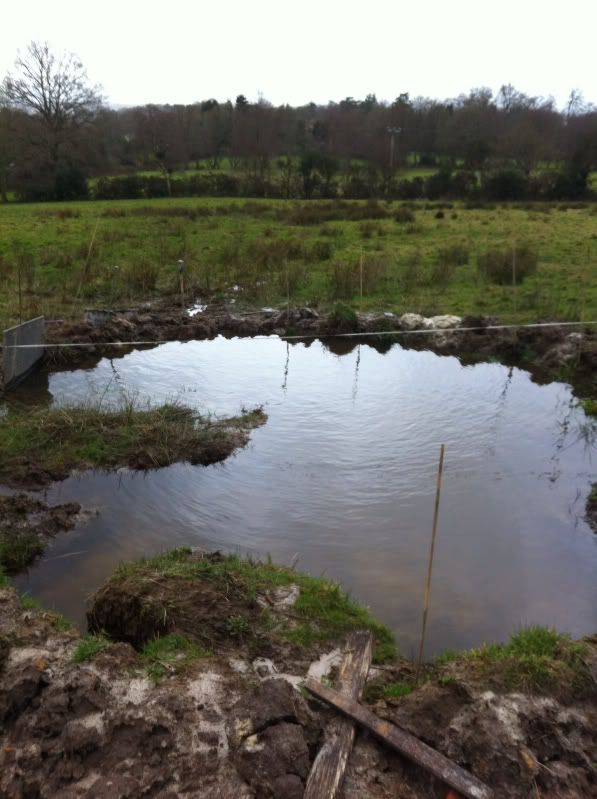
A quick calculation after a period of fairly heavy rain showed that the outflow from the pipe was aroudn 3,000 gallons a day - this is likely to fall during the summer but if I dig the entire 5m circle to 2 feet deep, the pond will only hold about 2,700 gallons, which means it should fill up in a day:

Pretty full


The above picture shows the pond partially filled. On the left of the picture is a piece of board that I was using as a temporary dam. Behind this I've started digging a trench (following the line of the white tape you can just see) - this will form the overflow into the ditch.

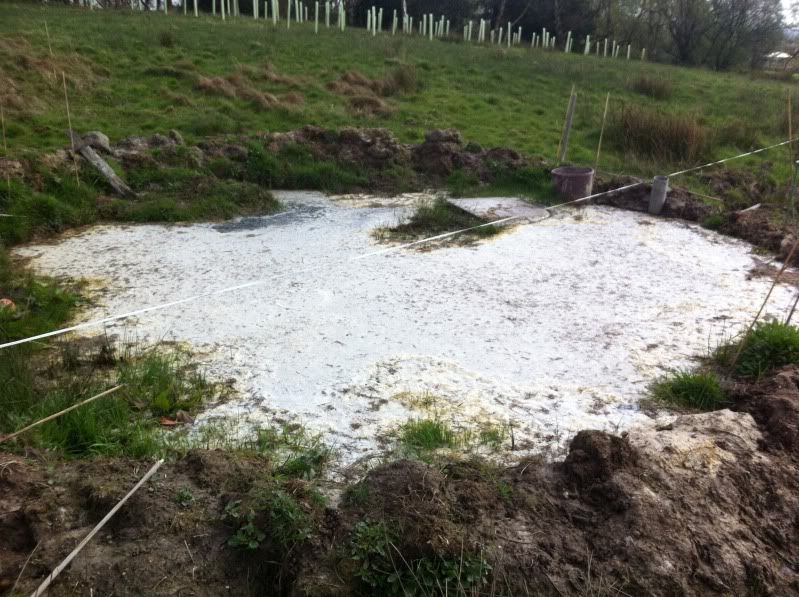
Due to the amount of rotting vegetation, at the moment the pond does tend to get covered in foam, caused by DOC (dissolved organic carbon). It's a bit unsightly, but completely natural and once I get some aquatic plants/animals in there, I should be able to keep the water clear:

DOC - dissolved organic carbon foam


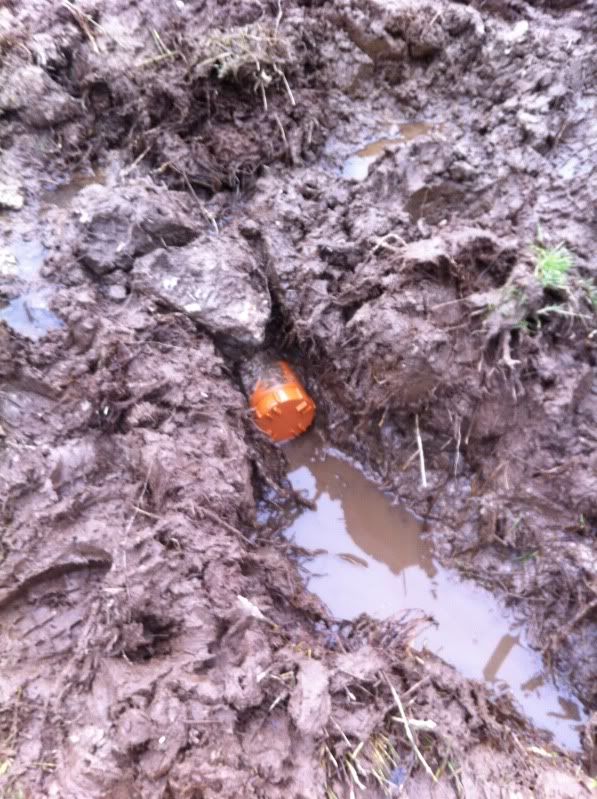
Because the pond is a work in progress, and I have planted a lot of tree down the hill, I needed a way to drain the pond so I can deepen it and water the plants underneath. With this in mind, I buried a piece of plastic drain pipe with a cap on it.

Unscrew me to unleash Hell!


Unscrewing the cap causes the entire contents of the pond to rush out in a torrent, taking a lot of mud with it, that gets deposited into the paddock below. I've also dumped some weeds into the water to drown them with the hope that is turns the entire pond into a big tank of compost tea!

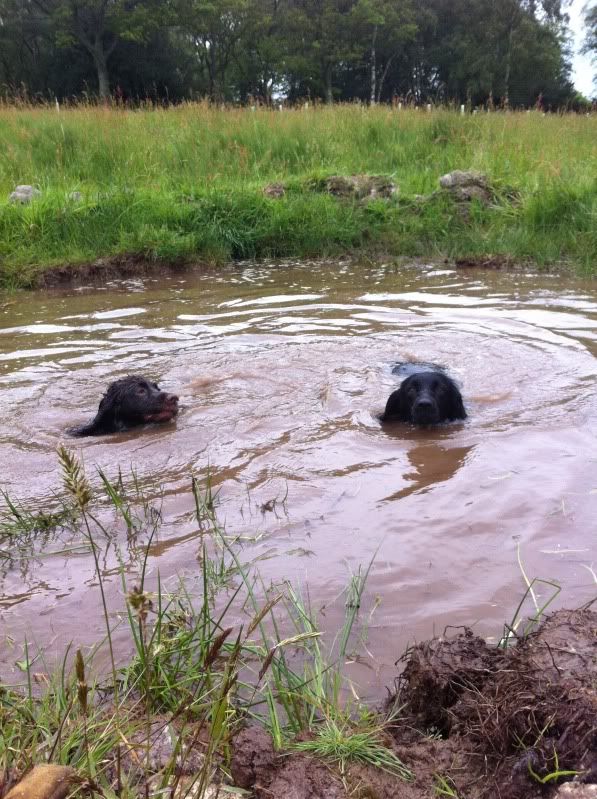
It also helps to send some helpers in to stir the silt up before draining it:

As Dog intended